

A structural shift is underway in how Indian occupiers evaluate office space. The determining factor is no longer volume of space leased, but the quality of that space, its location, and the operational capability it enables. CBRE’s 2026 India Office Occupier Survey quantifies this: 55% of occupiers evaluating relocation are prioritising higher-quality buildings specifically to enhance employee experience and support future growth (CBRE’s 2026 India Office Occupier Survey).
Leasing activity corroborates this shift. Across 2025–H1 2026, 61% of office leasing in India occurred within core micro-markets, while 41% was concentrated in investment-grade assets.
For corporate real estate leadership, this signals that relocation, renewal, and expansion decisions now extend materially beyond rent. Commute access, talent reach, asset quality, employee experience, technology, and ESG credentials have become significant evaluative criteria.
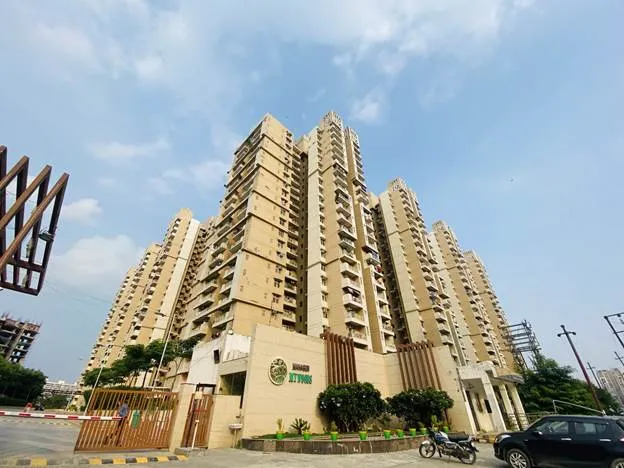
Factors Driving the Flight to Quality
Several variables are shaping occupier decision-making.
● Location and connectivity. 70% of occupiers identify commute and connectivity as a top-three criterion in site selection, while 47% express a preference for core or established micro-markets.
● Talent accessibility. 56% rank talent accessibility among their top-three site selection criteria, reflecting the centrality of location to talent attraction and retention.
● Building quality and workplace experience. 35% rank asset quality and workplace experience among their top-three criteria for intra-city site selection.
● Sustainability. 52% report defined ESG goals for their real estate portfolios, establishing sustainability as an increasingly material consideration.
● Technology and flexibility. 38% identify smart building systems as among the features most relevant to an AI-driven future of work, while 67% anticipate flexible space forming part of their portfolio within two years.
Quality considerations are also informing broader portfolio strategy. Occupiers pursuing expansion are evaluating how incremental space can elevate overall workplace quality, while those approaching renewal are balancing continuity against the requirement for well-located, high-quality space.
AI adoption has not diminished this focus. 57% of occupiers report no measurable impact from AI on leasing decisions to date. As AI continues to influence workplace utilisation patterns, emphasis remains on assets that support collaboration, employee experience, talent attraction, and evolving technology requirements.
Underlying Drivers of Demand for Higher-Quality Space
The post-hybrid role of the office
Hybrid work has materially altered employee expectations of the office. 77% of surveyed occupiers report utilisation above 50%, with investment priorities increasingly directed toward spaces that support collaboration, focused work, and employee experience.
Planned investment areas include:
● Enclosed or soundproof spaces for video calls: 52%
● WorkTech such as booking applications and sensors: 50%
● Collaborative spaces for unscheduled interactions: 48%
● Meeting rooms accommodating up to five people: 47%
Accommodating hybrid work remains a principal workplace experience focus for 50% of occupiers.
The implication is that the office must increasingly deliver an experience difficult to replicate remotely, necessitating design oriented toward collaboration, interaction, and flexibility.
Talent access and connectivity
Commute and connectivity (70%) and talent accessibility (56%) represent the two most frequently cited site selection criteria. This emphasis on connectivity is reflected in operational risk assessments: 95% of occupiers regard traffic congestion and commute as a threat to operations and employee experience, while 66% cite public transit access and last-mile connectivity as infrastructure concerns.
For occupiers, location extends beyond physical address to encompass accessibility for employees and connectivity to relevant talent pools.
Sustainability as a baseline requirement
52% of occupiers report defined ESG goals for their real estate portfolios, rising to 82% among large organisations. As these commitments become further embedded within corporate real estate strategy, green certification and sustainable building features are increasingly evaluated as baseline requirements rather than discretionary enhancements.
CBRE’s sustainability advisory supports organisations in securing green building certifications including LEED, IGBC, and GRIHA.
Building services and technological capability
Occupiers are also expecting increased support from developers and landlords.
75% seek developer support on safety and security infrastructure, while 69% expect support for app-based service delivery.
Smart building systems are particularly relevant within the context of an AI-driven future of work. 38% identify features such as sensor-driven utilisation monitoring and predictive maintenance as among the most significant, making smart building systems the highest-ranked feature within this category.
Building quality is therefore increasingly determined by factors beyond physical design, encompassing technology, services, safety, and infrastructure.
Leasing Data and the Flight to Quality
|
Indicator |
Share |
|
All office leasing in core micro-markets |
61% |
|
All office leasing in investment-grade assets |
41% |
|
Leasing transactions in core micro-markets that were in investment-grade buildings |
46% |
|
New office completions that were investment-grade assets |
57% |
Source: CBRE’s 2026 India Office Occupier Survey
Interpreting the data
Occupier preference and market activity align closely. 47% of occupiers prefer core or established micro-markets, with a substantial proportion of leasing activity concentrated accordingly.
Investment-grade assets similarly account for a significant share of leasing activity within core micro-markets, underscoring the relevance of asset quality alongside location.
New supply reflects a comparable pattern, with investment-grade assets representing 57% of new office completions.
Collectively, these indicators point to a market in which occupiers are seeking a combination of accessibility, quality, and future-readiness.
The Continued Primacy of Location
Core micro-markets remain the preferred option
Occupier location preferences for new office space are as follows:
● Core or established micro-markets: 47%
● A combination of core and non-core: 25%
● Non-core or emerging micro-markets: 8%
● No clear preference, or dependent on requirements: 20%
This preference is particularly pronounced among GCCs, with 58% of GCC respondents favouring core micro-markets, compared with 36% of non-GCC occupiers.
CBRE notes that for GCCs specifically, commute optimisation and established infrastructure represent important levers for talent attraction and retention.
Availability constraints
40% of occupiers express concern regarding the availability of high-quality, well-located space through 2028, including 29% specifically concerned about space meeting both criteria simultaneously.
For occupiers evaluating relocation or expansion, this underscores the growing importance of early planning. Understanding asset availability ahead of urgent requirement can materially improve optionality.
Transit access as a decision factor
Public transport access ranks among the most significant factors influencing occupier response to an asset. 38% would exit, reject, or seek a discount on a building lacking public transport access.
This finding reinforces the centrality of connectivity to the flight-to-quality trend. A high-quality building with limited accessibility may fail to deliver the workplace experience or talent access occupiers require.
Infrastructure investment and micro-market evolution
Infrastructure investment is also reshaping the outlook for both established and emerging business districts.
CBRE Research tracks upcoming metro, road, and airport projects across Bengaluru, Mumbai, Delhi-NCR, Hyderabad, Pune, Chennai, and Kolkata. Districts anticipated to benefit include Outer Ring Road in Bengaluru, BKC and Powai in Mumbai, and Financial District in Hyderabad.
For occupiers, planned infrastructure represents a meaningful consideration in assessing long-term locational potential.
Defining a High-Quality Office
A high-quality office is no longer defined solely by the building. Occupiers are assessing the broader experience an asset delivers.
|
Attribute |
What occupiers report |
|
Commute and connectivity |
70% rank it among their top-three site selection criteria |
|
Talent accessibility |
56% rank it among their top-three criteria |
|
Asset quality and workplace experience |
35% rank it among their top-three criteria |
|
Asset stature |
24% rank it among their top-three criteria |
|
Safety and security |
23% rank it among their top-three criteria; 75% want developer support |
|
Green building certification |
26% would exit, reject or seek a discount if absent |
|
Health and wellbeing certification |
30% would exit, reject or seek a discount if absent |
|
Smart building systems |
38% cite them among the features that would matter most in an AI-driven future of work |
These findings indicate that quality assessment is increasingly multidimensional, incorporating location, accessibility, workplace experience, sustainability, technology, and building services.
An Evaluation Framework for Quality Relocation
A relocation decision should extend beyond headline rent to assess how comprehensively an asset supports organisational requirements.
● 1. Location: Is the asset situated within a core or established micro-market, or a location supported by planned infrastructure?
● 2. Building quality: Does the asset satisfy current expectations regarding workplace experience, safety systems, certifications, and integrated campus features?
● 3. Accessibility: Does the building offer reliable public transport and last-mile connectivity? This factor materially influences occupier retention or rejection of an asset.
● 4. Rental economics: Assess rent and escalation alongside lease terms, commute, asset quality, and overall employee experience. 30% of occupiers rank existing rentals and escalation among their top-three criteria, compared with 70% for commute and connectivity.
● 5. Employee experience: Does the building support collaboration, hybrid work, wellbeing, and organisational identity? 65% cite identity and culture through design as a focus area.
● 6. Sustainability: Does the asset align with organisational ESG goals and certification requirements?
● 7. Technology and infrastructure: Are smart building systems, app-based services, and reliable infrastructure present?
● 8. Flexibility: Can flexible space supplement the core lease to provide additional agility? 67% of occupiers expect flexible space within their portfolio within two years.
● 9. Long-term scalability: Can the location and asset support future growth? 77% of occupiers expect their India office portfolio to grow over the next two years.
The distinction between rent and comprehensive value is becoming increasingly significant, with occupiers evaluating access, talent reach, employee experience, technology, and long-term flexibility alongside rental economics.
Implications Across the Real Estate Ecosystem
For occupiers
Occupiers should plan relocation and expansion requirements well in advance, given constrained availability of high-quality space in established locations.
Flexible workspace provides a structural mechanism for speed-to-market and portfolio agility, reducing dependence on conventional leasing structures.
For landlords and developers
The opportunity lies in developing assets aligned with occupier priorities, including:
● Prioritising commute access and transit connectivity in site selection
● Designing AI-ready buildings with smart systems and reconfigurable spaces
● Investing in workplace experience and employee-focused amenities
● Developing quality office space in select Tier-II cities
● Partnering with occupiers on safety, security, and employee experience
75% of occupiers seek developer support on safety and security infrastructure, while 61% expect developer partnership on employee experience improvements.
For investors
For investors, the flight to quality presents an opportunity to reposition ageing assets in line with evolving occupier expectations.
CBRE’s analysis indicates green certification is approaching standard practice, while commute access and asset experience offer meaningful differentiation opportunities.
Retrofitting is also gaining traction, with 36% of occupiers considering energy efficiency upgrades for older offices, indicating the growing significance of upgrading existing stock alongside new development.
Frequently Asked Questions
What does flight to quality mean in commercial real estate?
Flight to quality describes occupier movement toward higher-quality office buildings and locations. CBRE’s 2026 India Office Occupier Survey finds 55% of occupiers considering relocation are targeting better-quality buildings to enhance employee experience and support future growth.
Why are companies moving to higher-quality offices in India?
Companies are increasingly evaluating office space against a broader criteria set, including commute and connectivity, talent accessibility, asset quality, workplace experience, sustainability, and technology. Commute and connectivity rank highest at 70%, followed by talent accessibility at 56% and asset quality and workplace experience at 35%.
How does location influence office relocation decisions?
Location is central to relocation decisions. 70% of occupiers rank commute and connectivity among their top-three criteria, while 47% prefer core or established micro-markets. GCCs demonstrate an even stronger preference for core locations, at 58%.
Are occupiers willing to pay a premium for quality features?
The survey indicates sustainability is increasingly regarded as a baseline requirement rather than a feature commanding a rental premium. Public transport access is notable, with 18% of occupiers willing to pay a premium for it.
What share of India’s office leasing is in investment-grade assets?
During 2025–H1 2026, 41% of all office leasing in India occurred within investment-grade assets. Within core micro-markets, 46% of leasing transactions were in investment-grade buildings.
Concluding Observations for Corporate Real Estate Leaders
India’s flight to quality is evident across both occupier strategy and market activity. For corporate real estate leaders, the determining question is no longer simply the quantum of space required, but which assets can support business growth, talent access, and workplace expectations over the long term.
Prior to committing to relocation, renewal, or consolidation, occupiers should evaluate:
Quality: Does the asset meet current standards for safety, technology, and workplace experience?
Location: Is it situated within a well-connected micro-market with reliable public transport access?
Employee experience: Does it support collaboration, hybrid work, and expected workplace identity?
Portfolio efficiency: Can the relocation satisfy current requirements while accommodating future growth?
Timing: Given constrained availability of high-quality, well-located space, what lead time is required to secure an appropriate option?
Given sustained demand for high-quality space in established locations, early planning affords occupiers greater choice.
Planning a relocation, renewal, or consolidation? CBRE’s transaction advisors and workplace strategists work with occupiers across India to evaluate locations, assess asset quality, and identify space meeting long-term portfolio requirements. Connect with CBRE.